Recently, the 33 1/3 series held an open call for proposals. I submitted one for Low’s Christmas. It was not selected. So, since this is unlikely to appear anywhere else, I figured I’d post the introduction/sample chapter I sent in. It’s a little odd to do this, I know: “hey, here’s some writing that was deemed insufficiently good!” is a weird position to take. But maybe one of you will find it worth a read.
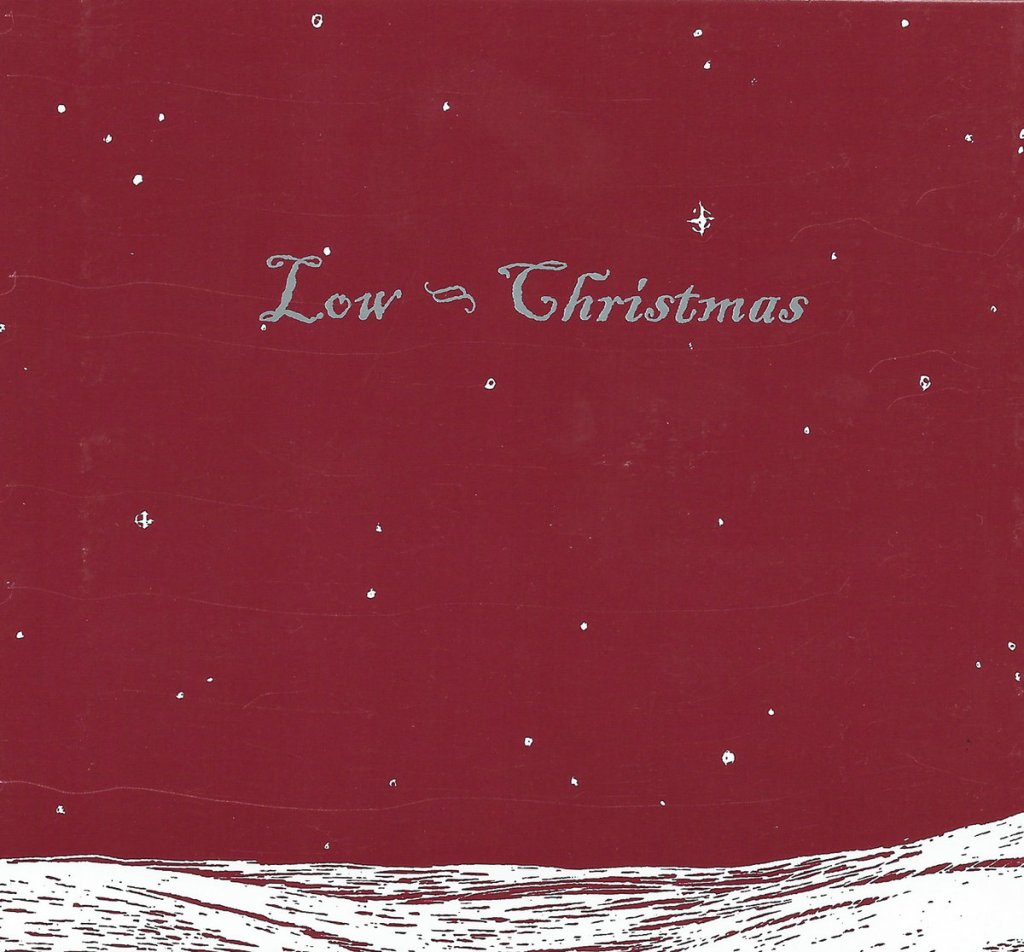
Like it or not, holidays are about tradition. That doesn’t always mean a wholehearted embrace of the familiar; to be about tradition can just as easily manifest itself as the rejection of old traditions and sometimes the forging of new ones.
All of which helps explain why I’ve spent the last few Christmas Eves listening to a sprawling freeform music marathon on the Princeton, New Jersey radio station WPRB. Most years it runs for 25 hours; one year it ran for 30. It’s the brainchild of one Jon Solomon, proprietor of the record label Comedy Minus One, and he’s been doing it for 30 years as of this writing. (Full disclosure: I’ve also contributed short stories to the marathon in recent years.) There are several things about this tradition that I love, from the occasionally-bizarre takes on Christmas songs that show up over the course of the program to the sense of community that’s emerged among contributors and listeners.
And sometimes it makes you think about canons. On Christmas Eve 2023, I was listening to the marathon when an unfamiliar version of a familiar song came over the airwaves. The artist was the Littleton Family Band; the song was “Just Like Christmas,” originally written and performed by the band Low. This was an especially bittersweet cover for several reasons, the first of which was the death a little over a year earlier of Low drummer and co-founder Mimi Parker at the age of 55. The band performing the cover featured members of Ida, a band that was closely associated with Low for many years. In other words, this wasn’t a cover by fans; this was a cover by peers, by friends.
In identifying the song, Solomon mused that “Just Like Christmas” had become part of a modern canon. Hearing him make that observation put a lot of things into perspective. It got me thinking about what makes a canonical Christmas song, and it got me thinking about where “Just Like Christmas” — and the album on which it can be found, Christmas — fits into Low’s discography.
***
Consider Low in the decade leading up to the release of Christmas. The band was best known for helping to define the “slowcore” sound. The nexus of the group, Alan Sparkhawk and Mimi Parker, were a married couple who hailed from Duluth, Minnesota — a city whose previous claim to musical history came from being name-checked in the lyrics for the Meat Puppets’ “Lake of Fire.” Low released their first few albums on Vernon Yard, a subsidiary of Virgin Records, meaning that for a brief period, Low and The Verge were labelmates. Low decamped to the Chicago-based indie label Kranky, putting them in the company of several like-minded artists, from the magnificently melancholic Stars of the Lid to the orchestral agitprop of Godspeed You! Black Emperor. Still, Low’s first few albums for Kranky followed the same template: slow-burning tempos, lyrics wrestling with faith and intimacy, and the distinctive vocals of both Sparhawk and Parker.
Consider Low in the aftermath of Christmas. Most artists, as they start to enter their second and third decades of work, refine their sound; Low, by contrast, expanded it. They moved to Sub Pop Records with the release of 2005’s The Great Destroyer and remained there over the next 17 years. The group’s final pair of albums, Hey What and Double Negative, found Low’s collaboration with producer BJ Burton taking them into increasingly esoteric spaces — still recognizable as Low, but making starker use of feedback and unconventional arrangements. There’s also the time that they played a festival set at Minneapolis’s Walker Art Center that was one long drone piece — the precise opposite of what most artists playing in a festival setting would do. At a time when most of their peers were becoming more risk-averse, Low entered a zero-fucks-given zone, and it was breathtaking.
Now, think about the opening minutes of Christmas. “Just Like Christmas” is in no way slowcore, nor is anything about it slow, period. The sound of it is much closer to a Phil Spector “wall of sound” production: an uptempo drumbeat, a wall of feedback, a bounce. The sound here was much closer to what groups like Black Tambourine or the Aislers Set were doing at roughly the same time. This wasn’t just Low trying out another style; this was them embracing it, illustrating what seemed at the time to be a road not taken. I remember hearing “Just Like Christmas” for the first time in 1999 and calling my friend Scott, the guy who’d turned me on to Low to begin with. We were both shocked: this was Low? The band that soundtracked our late-teens/early-twenties melancholy? Also, this was great!
And of course, we wondered whether they might record more songs in this style. Little did we know what the band would have in store — which wouldn’t necessarily represent a reprise of “Just Like Christmas,” but would find the band moving into far more experimental territory, both relative to their earlier work and on a more empirical level.
***
There’s more to Christmas than “Just Like Christmas.” Some of the album’s other originals, like “Long Way Around the Sea” and “Taking Down the Tree,” have been covered by high-profile artists — in this case, Pedro the Lion’s David Bazan and Everything But the Girl’s Tracy Thorn, respectively. Low’s versions of more traditional Christmas songs have also had a second life, most notably with Christmas’s version of “Little Drummer Boy” showing up in a Gap ad campaign that was an early herald of just how big the “indie rock bands soundtracking commercials for massive corporations” sonic boom was going to be.
Christmas’s sonic legacy is only part of the story behind this album. There’s also the matter of its role as a work of art made by believers; Sparhawk and Parker’s Mormonism was an early hook for many features and reviews written about the band. And while the group’s founders’ faith was a steady presence in their music, they never seemed evangelical about it, which likely gave them more cachet among a certain strain of listeners. Or, to phrase it slightly differently, there was nothing remotely ironic about Low — something even a lapsed Episcopalian-turned-agnostic like me could appreciate.
What I find myself coming back to as I listen to Christmas decades after I first heard these songs is the quiet radicalism of this record. Plenty of artists have their own Pet Sounds or Sgt. Pepper’s Lonely Hearts Club Band in their discography: an album where their sound suddenly makes a quantum leap forwards and transforms the boundaries of their sound. It’s hard to imagine another artist where that radical leap forward took place on a Christmas album.
But that’s what makes Low’s Christmas so compelling. As a standalone album, it’s eminently listenable — a holiday-themed album that you can play for friends and family who have never heard of indie rock, Kranky Records, or the concept of slowcore and have them appreciate it. As an entry in Low’s discography, though, it represents a massive shift for the group: that moment when the band opened up their sound and, for arguably the first time, realized the potential that they had to transform it.
Sometimes, when the holidays come around, you have to make your own traditions. And sometimes, you set them down on tape and they become part of other people’s traditions as well. Low’s Christmas is that rarest of works of art: one that’s equal parts traditional and radical. And we’re all the better for it.
 Notes, thoughts, & miscellany
Leave a comment